
When BOP Is the Right System
The BOP inmate locator is the federal prison release source, not a Yuma County jail list. It is useful when a Yuma County arrest or hold became a federal case, when a federal sentence was imposed, or when a person was designated to BOP custody after federal sentencing. The local sheriff record remains the starting point for a short county-jail stay in Wray, but the release path changes once the person leaves local custody for a federal matter.
Yuma County's local jail path begins with the Yuma County Sheriff's Office at 310 Ash Street, Suite G, Wray, CO 80758. The sheriff office phone is 970-332-4805, and the county jail phone identified in the research is 970-345-2244. Those contacts matter when the question is whether the person left the Yuma County Jail on bond, time served, court order, probation, dismissal, medical hold, transfer, or another local release reason. BOP should not be used to explain every county jail disappearance.
The key distinction is custody authority. A person released from the Yuma County Jail may have been released into the community, moved to another Colorado jail, committed to the Colorado Department of Corrections, transferred to ICE, moved through U.S. Marshals custody, or later sentenced to federal prison. Only the federal prison branch belongs in BOP. If a county entry says transfer, hold, or federal authority, the destination and receiving agency should be confirmed before the event is described as a federal release.
Confirm a Federal Release
- Start with the Yuma County Jail or sheriff record if the first known event was a local booking in Wray.
- Read the county release reason carefully. Bond, court order, time served, probation, and transfer mean different things.
- Use the Yuma County court case when the release was ordered by a judge, tied to bond, tied to sentencing, or followed by a mittimus.
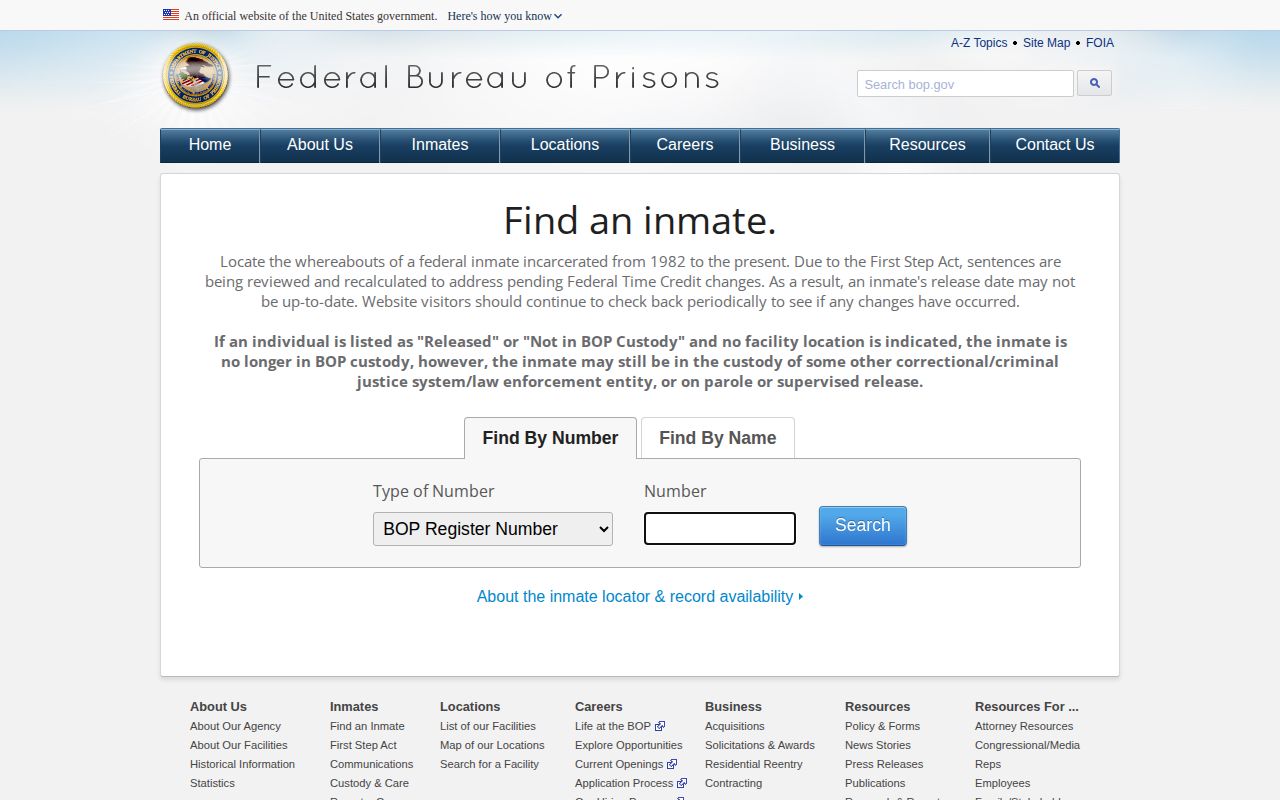
- Search BOP by number or name only when the person was sentenced to federal prison or appears to have entered federal prison custody.
- Read BOP Release Date and Location together, because one field without the other can be misleading.
- Use federal court records for federal pretrial detention, sentencing, supervised-release events, or orders that do not appear in BOP.
- If the person left Yuma County Jail by transfer, confirm whether the destination was USMS, BOP, another jail, CDOC, ICE, or medical custody.
This sequence prevents a common mistake: treating "not in the Yuma County Jail" as the same thing as a completed federal release. A person can leave the sheriff's custody because a federal detainer, federal warrant, or transport order moved the person to a different custodian. In that situation the county release date is a local custody exit, while the federal release date is a later BOP, court, or supervision event.
BOP Records and Field Meaning
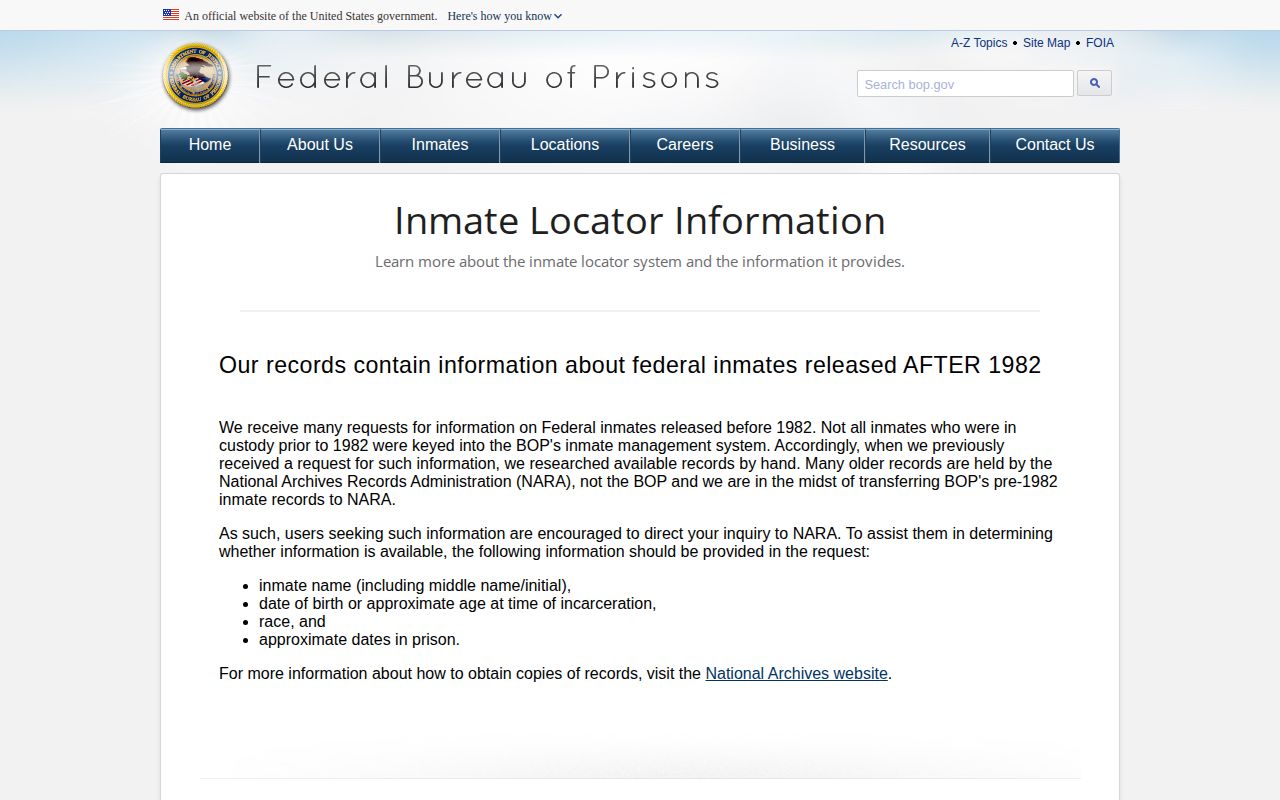
BOP says its inmate locator covers federal inmates incarcerated from 1982 to the present. BOP's record explanation says most searches show a Release Date. If that date is in the future, it is a projected release date based on BOP calculations. If that date is in the past and no facility is shown, BOP says the person was released on that date and is no longer in BOP custody. If the Location field says Released or Not in BOP Custody, the person is no longer in BOP custody.
The fields should be read together. A future Release Date is not proof that release already happened. A past Release Date with no facility is stronger evidence of BOP release, but it still does not erase possible federal supervised release, parole-style supervision for older cases, state custody, immigration custody, or another justice-system obligation. BOP itself warns that someone no longer in BOP custody may still be in another system or under supervision.
BOP search results can include identifying fields such as name, register number, age, race, sex, release date, and location. When a number is available, use it because federal register numbers distinguish people with similar names. When only a name is available, compare any available age or other identifier with the Yuma County court record, sheriff record, or federal case record before assuming the result belongs to the same person.
Projected Dates Can Change
The First Step Act note is important for federal projected release dates. BOP says sentences are being reviewed and recalculated to address pending Federal Time Credit changes and that release dates may not be up to date while those calculations are processed. For a Yuma County reader, that means a future BOP Release Date should be described as a projected administrative calculation, not a guaranteed day the person will walk out.
Actual federal release should be confirmed after the date passes by checking whether BOP shows a past Release Date with no facility, Released, or Not in BOP Custody. If the case still has federal supervised-release hearings or revocation issues, the federal court docket may be the better source for what happens after prison. If the person appears to have moved from BOP to another custodian, BOP answers only the federal prison custody question.
Federal Court and Holding Records
BOP is strongest after federal sentencing or designation. Before that point, a federal case may be visible through the federal court docket, the U.S. Marshals custody path, or a local holding facility. A person arrested in or near Yuma County on a federal warrant may be held locally, transported, appear in federal court, receive bond or detention orders, and later enter BOP only if a sentence or designation sends the person there.
That is why federal release work often uses three records instead of one. The local Yuma County Jail or sheriff record can show the county release or transfer date. The court docket can show detention, bond, sentencing, revocation, or supervised-release events. BOP can show federal prison custody and release fields after BOP receives the person into its system. None of those records should be forced to answer a question outside its own custody role.
If the Yuma County court or sheriff record says only that a person was transferred, ask what agency received the person. A transfer to CDOC belongs on the state prison path. A transfer to ICE belongs on the immigration custody path. A transfer to USMS may remain a federal pretrial or transport matter until BOP designation occurs. A local holding facility may be the only source for a short federal hold that never becomes a BOP prison sentence.
Yuma County Records Still Matter
Yuma County, Colorado does not appear in the research as publishing an official online current roster, 24-hour release list, or 72-hour release feed. For the local part of a federal custody story, use the sheriff's office, jail phone, court docket, Colorado VINE if the custody event is available there, and a written records request. The county CORA page says requests must be written to the proper custodian, specific as to records and dates, and may require a deposit before the response time begins.
A useful local request names the person, date of birth if known, booking date or date range, case number if known, and the exact records sought. For a federal transfer question, ask for the booking sheet, release date and time, release type, release authority, listed charges, bond or release order if held by the sheriff, and transfer destination if recorded. The county says standard-page copies are 25 cents, retrieval may be charged at actual cost not exceeding $41.37 per hour, and normal production is three working days after deposit with a possible extension generally not more than seven working days.
Not a County Jail List
BOP is not a Yuma County recent-release feed. It does not replace sheriff records, court dockets, Colorado VINE, CDOC, ICE ODLS, or a local holding facility. Use BOP when the person is a federal prisoner or former federal prisoner. Use Yuma County records when the question is what happened at the county jail in Wray. Use the Colorado Judicial Branch Yuma County docket when the legal reason for release is bond, dismissal, sentencing, probation, warrant clearance, or another court event.
Colorado VINE can still be useful as a custody-status and notification tool if the relevant agency feeds data, but it should not be treated as a permanent archive. CDOC should be used when a Yuma County case results in state prison or parole. ICE ODLS should be used only for current or recent immigration custody. BOP remains the federal prison release source, and the local sheriff or court record remains the source for the county-jail exit.
The most accurate wording is custody-specific. "Released from Yuma County Jail" means the sheriff's jail no longer held the person. "Released from BOP" means BOP no longer held the person. "Transferred" means the person left one custodian for another and may still be detained. Keeping those labels separate is the difference between a useful release page and a misleading one.